

Cheese Scones
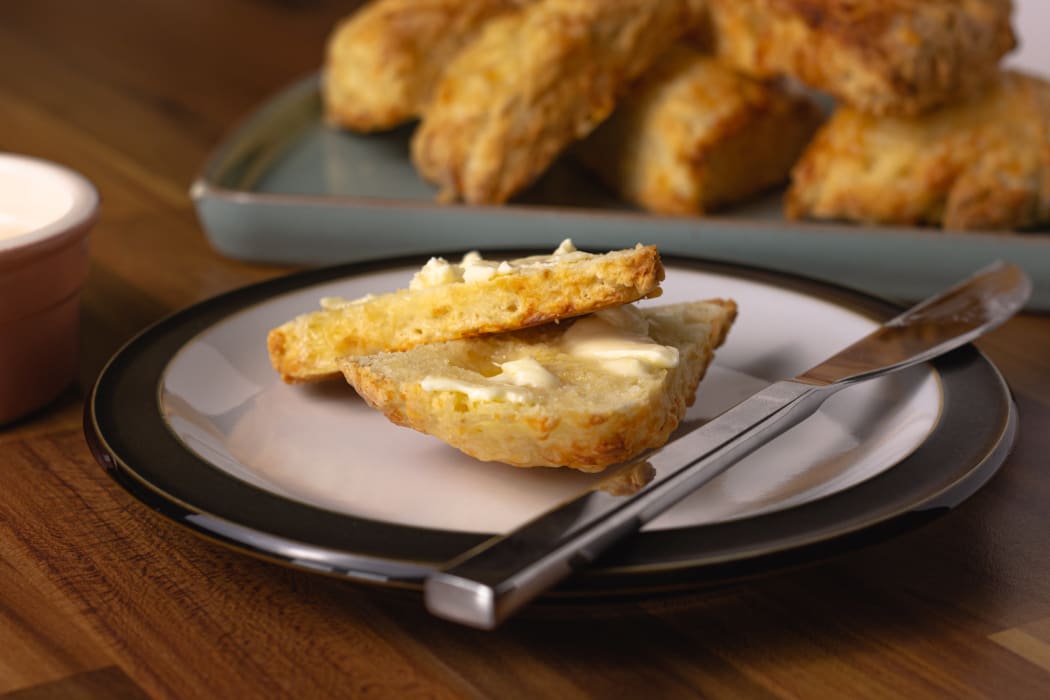
Cheese scones Photo: 123RF
As Elizabeth David wrote in English Bread and Yeast Cookery: ‘Once you start on scones, where do you stop?’ There are so many varieties and everyone is certain they know exactly what a scone should look, smell, feel and taste like, yet these certainties seem to vary wildly. Round or square, large or small, soft or crusty, with or without an egg in the mix… My position is this: I have never used a round cutter to shape scones; I like them square, and I think they should be floury and crusty outside and tender inside, but not too soft and squishy in the mouth. My scone mentor is Myra Lawrie, whose Cheese Scones are to my mind the pinnacle of perfection. I stood beside Myra as she made them and noted the precise measurements of her quantities for each ingredient and exactly how she handled them, and I’ve given it all below. The recipe works brilliantly. If you make them just a couple of times you’ll achieve success – or be very close to it. But be prepared for the scone-maker’s predicament: Myra regularly says that her latest batch is not quite up to scratch, and your own ideal of perfection may still elude you. Your family will not complain, however, and you’ll have a good reason to keep on trying for the summit.
Ingredients
- 2 cups flour*
- 2 tsp powder
- 3 shakes cayenne pepper
- 2 cups tasty cheese **
- ¾ cup boiling water
- ¼ cup milk
- half bottle cream
- extra cheese †
* Myra uses heaped breakfast cups of high-grade flour and heaped teaspoons of baking powder.
** for the scones the cheese should be grated
† for the tops – either grated or in small pieces
Method
Preheat the oven to 400°F / 200°C. Sprinkle a baking tray with flour. Grate the cheese coarsely. Put the kettle on to boil and put ¼ cup milk into a measuring cup.
Sift the flour and baking powder into a large mixing bowl, lifting the sifter high to aerate the flours much as possible. Add the cayenne pepper and the grated cheese and mix through lightly.
Pour the boiling water onto the milk to make it up to one cup.
Make a well in the centre of the flour and pour in the cream, then half of the milk and water mixture, and stir together with a table knife.
Add the rest of the milk and water if you need it to make the dough come together – it should be not too dry and not too wet. Your hands shouldn’t stick to the dough.
Tip the dough directly onto the floured baking tray. Pat it down with floured hands into a square about 1 inch / 3cm thick. Flip the whole square over to make sure it is well floured.
Cut into 9 (or 16) squares and put a small piece of cheese or some grated cheese in the centre of each.
Bake for 12 – 15 minutes until nicely risen and golden, rotating the tray halfway through.
Cool on a wire rack. Makes 9 larger scones or 16 small scones.
Variations
Myra makes Plain Scones exactly the same way but with no cheese, no cayenne and no added sugar. She doesn’t like them sweet. And she comments that cream left in the fridge for a week or so, even if slightly sour, is still very good for scone-making. Making scones with cream signals the dairying focus of New Zealand; you could use full cream milk or buttermilk instead, in which case rub in 2 tbsp/30 g butter before adding the liquids.
Date Scones are the same again, but with about 1½ cups chopped dates and a little sugar. I also brush the tops with cream and sprinkle with Demerara sugar.