

Biologist Clive Evans
The waters around Antarctica sit at around minus 1-point-93 degrees celcius - yet most fish have a freezing point of minus zero-point 7 and so cannot survive in Antarctic waters.
Auckland University biologist Clive Evans and his colleagues are studying the remarkable ways Antarctic fish manage to survive the icy waters without freezing. It's all due to their ability to produce antifreeze glycoproteins which bind and inhibit the growth of minute ice crystals that can enter the fish - and preventing their body fluids from freezing.
Clive Evans took Kathryn Ryan out to the sea ice off Ross Island to catch some of these fish, which they use to try to work out how they make anti-freeze and what this can teach us.
Gallery: Ice fishing with Clive Evans
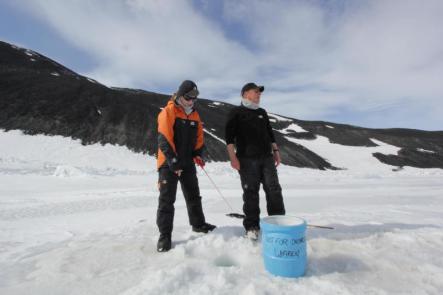
Kathryn Ryan ice fishing in front of Arrival Heights with Clive Evans.