

Our Changing World for Thursday 11 June 2009
Dying Stars

White dwarfs are the dying remnants of stars like our sun. They are slowly cooling because the energy they radiate into space in the form of photons and neutrinos from the star's surface and core is no longer replenished by internal nuclear reactions. Denis Sullivan, at Victoria University, is using a 1m-telescope at the Mt John Observatory to observe white dwarfs to study how stars decay, but also as a method of verifying the existence of the neutrino-based mechanisms within their core.
White dwarfs were first identified as unusual stellar objects in the early part of last century. Their luminosity, temperature and mass implied that they were compact objects, very dense and with high surface gravities, and internal matter at extremely high pressures and temperatures. During the 1930s, relativity theory helped to determine that all stars that have a mass similar to that of our sun - which applies to 98 percent of all stars - turn into white dwarfs at the end of their lives. More massive stars either form neutron stars or supernovas when they die.
Image of Mt John Observatory is courtesy of Fraser Gunn. For further information visit www.mackenziesky.co.nz
Native Frogs and Chytrid Disease
This month marks the end of the Year of the Frog, intended to draw attention to the conservation plight of frogs worldwide. At least half of the world's amphibian species are threatened with extinction. Habitat destruction is a major threat to many frog species, but more recently a deadly disease has been causing widespread extinctions. Unfortunately, chytrid disease has already reached New Zealand, and is posing a real threat to our four ancient endemic frog species.
Zoologist Phil Bishop, from the University of Otago, has been involved in studying the disease in Archey's frogs, a species that is already ranked as highly endangered. As well as investigating possible cures for the disease, he is investigating metabolic bone disease which is a problem in captive amphibians and reptiles worldwide, and is making it difficult to establish a captive breeding population of Archey's frog.
Listen here to previous stories on native frogs at Auckland Zoo and in the Karori Sanctuary, and an interview with Phil Bishop and Kalinka Rexer-Huber.
Fossil Crater
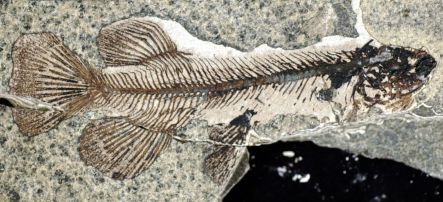
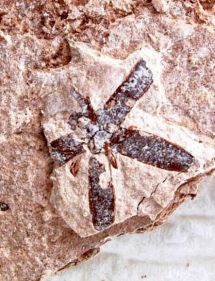

A maar crater inland from Dunedin was formed by a volcanic explosion about 23 million years ago, and probably filled up with water very quickly. The lake had no outlets and experienced very little disturbance - hence the layers of sediment are still intact and contain some of the best preserved fossils in New Zealand.
Among the fossils are complete fish and insects and leaves of several plants, including a fern which now only exists on the Three Kings islands and in some Northland forests, several leaves that haven't been found anywhere else in New Zealand, and two examples of orchids, which are the only organically preserved specimens worldwide.
 University of Otago palaeontologist Daphne Lee and her colleagues, geologist Jon Lindqvist and plant taxonomist Jennifer Bannister (pictured on the left), say the forests around the lake were similar to those found in Thailand today, suggesting that Otago experienced a much warmer climate back then, during a period known to geologists as the Oligocene.
All images courtesy and copyright of the University of Otago team.
Deepsea Corals and Palaeoclimates
In the last few decades, marine biologists have been discovering rich communities of creatures living in the deep oceans, including deepsea corals that are turning out to be the marine equivalent of long-lived trees. They have found living corals that are thousands of years old, as well as vast fields of fossil corals that date back tens of thousands of years.
Ron Thresher from Australia's CSIRO attended the recent Deepsea Coral Symposium in Wellington and told Alison Ballance that these deep-ocean corals are providing ancient climate data that are improving our understanding of ocean currents, and contributing to models of regional and global climate change.
Listen here to an interview about deep-sea coral with NIWA's Di Tracy and Helen Neill.
